Why QR Ordering Can Increase Average Customer Spend by 14%
When restaurants look for ways to improve revenue, common strategies include raising prices, controlling food costs, improving table turnover and reviewing labour expenses.
One factor that is often overlooked is the effect of the ordering method itself on customer spending.
Even with the same number of customers, more additional orders can increase average spend.
When average spend increases, total revenue becomes easier to grow.
The key is to create an environment where customers feel comfortable ordering more.
QR ordering is not simply a way to reduce the work involved in taking orders.
By allowing customers to browse the menu and place orders at their own pace, it becomes a tool for designing an ordering journey that can increase average spend.
Customers Tend to Spend More When They Order for Themselves
Research from an overseas university reported an interesting result.
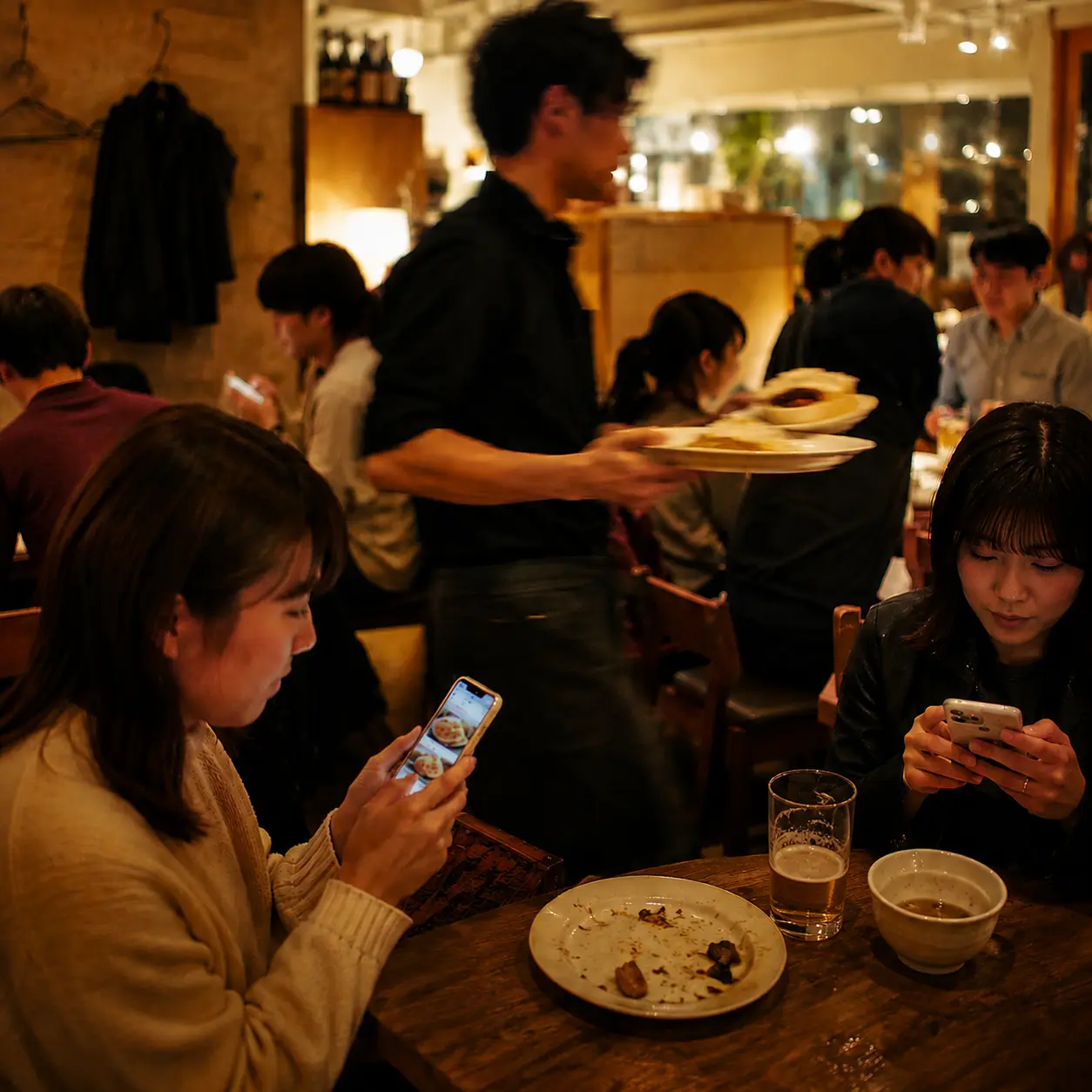
When customers placed orders themselves rather than ordering verbally through a staff member, their total order value was 14% to 16% higher.
For restaurant operators, that difference is difficult to ignore.
For example, if the average customer spend is ¥1,500, a 14% increase raises it to ¥1,710.
That is an additional ¥210 per customer group.
With 30 groups per day, the difference would be ¥6,300 in daily revenue.
Over 25 operating days, that would amount to ¥157,500 in additional monthly revenue.
This is only a simple illustration, and individual restaurants should not expect exactly the same result.
However, the research highlights an important point:
Giving customers the ability to order for themselves can become a powerful driver of revenue growth.
The Important Factor Is Self-Ordering, Not the Device
The main lesson from the research is not that customers used a particular machine or touchscreen.
The important factor is the behavioural and psychological change created when customers place the order themselves.
In a traditional ordering process, customers may need to:
- Get a staff member’s attention
- Decide while the staff member waits
- Place only the essential items because the restaurant is busy
These situations create small barriers to ordering.
Customers may decide against an additional item without consciously thinking about it.
When customers order for themselves, they can review more information before making a decision.
They can:
- Look at appealing food photographs
- Discover toppings and optional extras
- Review the available drinks and desserts
The more information customers see, the more opportunities they have to add another item.
QR ordering works in the same way.
Customers scan a code at the table, browse the menu on their own phone and place an order after making a considered decision.
For this reason, QR ordering should be viewed not only as a response to staff shortages, but also as a system for improving revenue.
Four Reasons QR Ordering Can Increase Average Spend
Why does QR ordering make higher customer spending more likely?
There are four main reasons.
1. Customers Discover More Add-On Items
Additional orders depend heavily on whether customers notice the items in the first place.
Side dishes, toppings, drinks and desserts will not sell simply because they are available.
They need to appear in front of the customer and become part of the decision.
With printed menus or verbal ordering, customers may complete their order before reviewing everything available.
A QR menu can create a clearer path through the ordering process.
For example, it can:
- Display toppings near the main dish
- Suggest drinks beside lunch sets
- Present desserts naturally after food categories
- Use photographs to make add-on items more appealing
This is not aggressive upselling.
It simply helps customers notice products they might otherwise overlook.
2. Recommendations Become More Consistent
Staff recommendations can increase additional orders.
For example:
- “Would you like a drink as well?”
- “You can upgrade this to a larger portion.”
- “This side dish is one of our most popular items.”
However, it is difficult to make these suggestions consistently.
During peak periods, staff may be focused entirely on processing orders and delivering food.
New employees may also lack the knowledge or confidence to explain every recommended item.
With QR ordering, the menu itself can provide these suggestions.
Recommended items, extras and desserts can be displayed consistently, regardless of how busy the restaurant is or how experienced the staff member may be.
3. Customers Can Order at the Exact Moment They Want Something
Timing is important for additional orders.
A customer may suddenly think:
- “I would like another drink.”
- “I could eat one more dish.”
When they cannot order immediately, that intention can disappear quickly.
They may hesitate because the staff appear busy.
They may decide to order later and then forget.
These are common examples of lost sales.
With QR ordering, customers can complete an additional order at the moment they want it.
Reducing this delay between intention and ordering can directly support higher average spend.
4. The Psychological Barrier to Ordering Becomes Lower
Customers sometimes experience a small psychological burden when placing additional orders.
They may think:
- “I do not want to call someone over just for a small extra.”
- “The staff look busy, so I should not bother them.”
- “I was still deciding, but I missed the right moment.”
These minor hesitations quietly remove potential orders.
When customers can order for themselves, that barrier becomes lower.
Whether it is a small topping or one more drink, they can place the order without worrying about interrupting staff.
The Real Value of QR Ordering Is the Customer Journey
If QR ordering is treated as nothing more than a digital version of a printed menu, much of its value is missed.
Its real value lies in designing the customer’s ordering journey.
Restaurants can decide:
- Which items customers see first
- When to suggest additional items
- Which photographs are most likely to stimulate appetite
- How quickly sold-out items are hidden to prevent errors
Each of these choices can affect average spend.
Printed menus take time and money to update.
Verbal recommendations vary between employees and service periods.
A QR menu makes it easier to keep improving how products are presented.
Reduce Lost Orders During Peak Periods
Restaurants are most likely to lose ordering opportunities during their busiest periods.
Examples include:
- The lunch rush
- Weekend evenings
- Unexpected periods of high demand
- Times when staff are occupied with delivering food
A customer may want another item but give up because there is no convenient moment to call a staff member.
That is lost revenue.
With QR ordering, customers can complete the order even when staff cannot reach the table immediately.
Creating a system that does not miss ordering opportunities helps protect revenue during the most important service periods.
Qroda Creates an Ordering Environment That Supports Revenue Growth
Qroda is a QR ordering application designed for restaurants.
Customers scan a QR code at the table, browse the menu on their own phone and place orders directly.
Qroda includes features such as photo menus, automatic English, Chinese and Korean translation, service charge settings and sold-out item management.
However, its value is not limited to reducing the work involved in taking orders.
Its main benefit is creating an ordering environment where customers can place additional orders easily and without unnecessary stress.
An easier ordering process creates more opportunities for additional sales.
More additional orders can increase average spend.
Higher average spend makes it possible to grow revenue without increasing customer numbers.
QR ordering is therefore both a defensive tool for managing staff shortages and a proactive tool for improving sales.
Restaurants do not simply need more digital systems.
They need an ordering environment designed to support revenue growth.
Qroda provides a practical way to create that environment.
References
-
University of Hamburg. Ordering via Touchscreen Increases the Amount Spent in Restaurants. https://www.uni-hamburg.de/en/newsroom/forschung/2023/0816-fv-24-bwl-marketing.html
-
Wagner, T., et al. The Impact of Touchscreen Ordering on Restaurant Spending: Evidence from Field Studies. University of Hamburg, Faculty of Business, Economics and Social Sciences.

