QR Ordering Improves Table Turnover: Reduce Ordering Delays and Serve More Customers with the Same Number of Seats
There are practical limits to increasing restaurant revenue by attracting more customers or adding more seats.
So how can a restaurant generate more revenue with the same number of tables and the same staffing level?
One answer is to improve table turnover.
Recent management research indicates that digital ordering, including QR ordering, can improve both table turnover and labour productivity.
Research Shows That Digital Ordering Can Improve Labour Productivity
A study of Japanese restaurants by Shimmura and Oura in 2021 examined how digital ordering affects restaurant operations.
The researchers reported that digital ordering transferred part of the order-taking process from staff to the ordering system, reducing the labour hours required to operate the restaurant.
More importantly, the study found that sales per labour hour increased.
What does this mean in practice?
Digital ordering reduces not only the time staff spend walking to tables and taking orders, but also the time they spend waiting while customers decide what to order.
As a result, restaurants can process more orders within the same period.
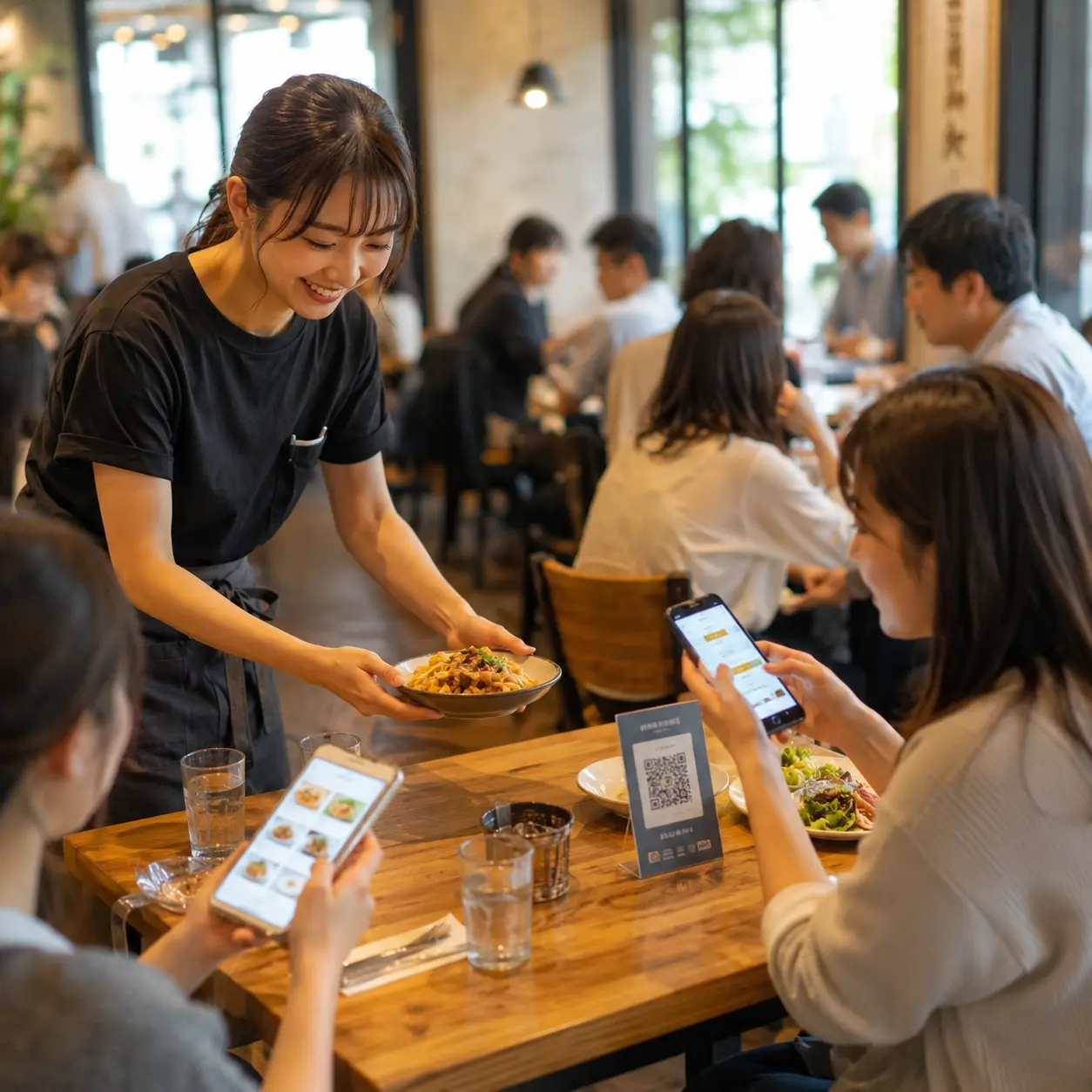
With QR ordering, customers do not need to wait for a staff member. They can compare menu items, review photos and place their order directly from their own phone.
This can shorten both the time required to make an ordering decision and the time it takes for the order to reach the kitchen.
QR ordering is therefore more than a convenient ordering method.
It is a practical system for improving labour productivity and table turnover.
The Hidden Waiting Time That Slows Table Turnover
Table turnover is not determined only by how long customers spend eating.
It is also affected by several less visible delays:
- Waiting for a staff member to take the first order
- Keeping a staff member at the table while deciding what to order
- Waiting to place an additional order because the team is busy
- Trying to request the bill but being unable to get a staff member’s attention
When these delays accumulate, each table remains occupied for longer.
During lunch service or other peak periods, even a few extra minutes can have a significant effect.
A small delay at each table can postpone the next seating and create lost revenue opportunities.
Improving table turnover does not mean asking customers to eat faster.
It means removing unnecessary waiting before, during and after the ordering process.
QR Ordering Removes Bottlenecks from the Ordering Process
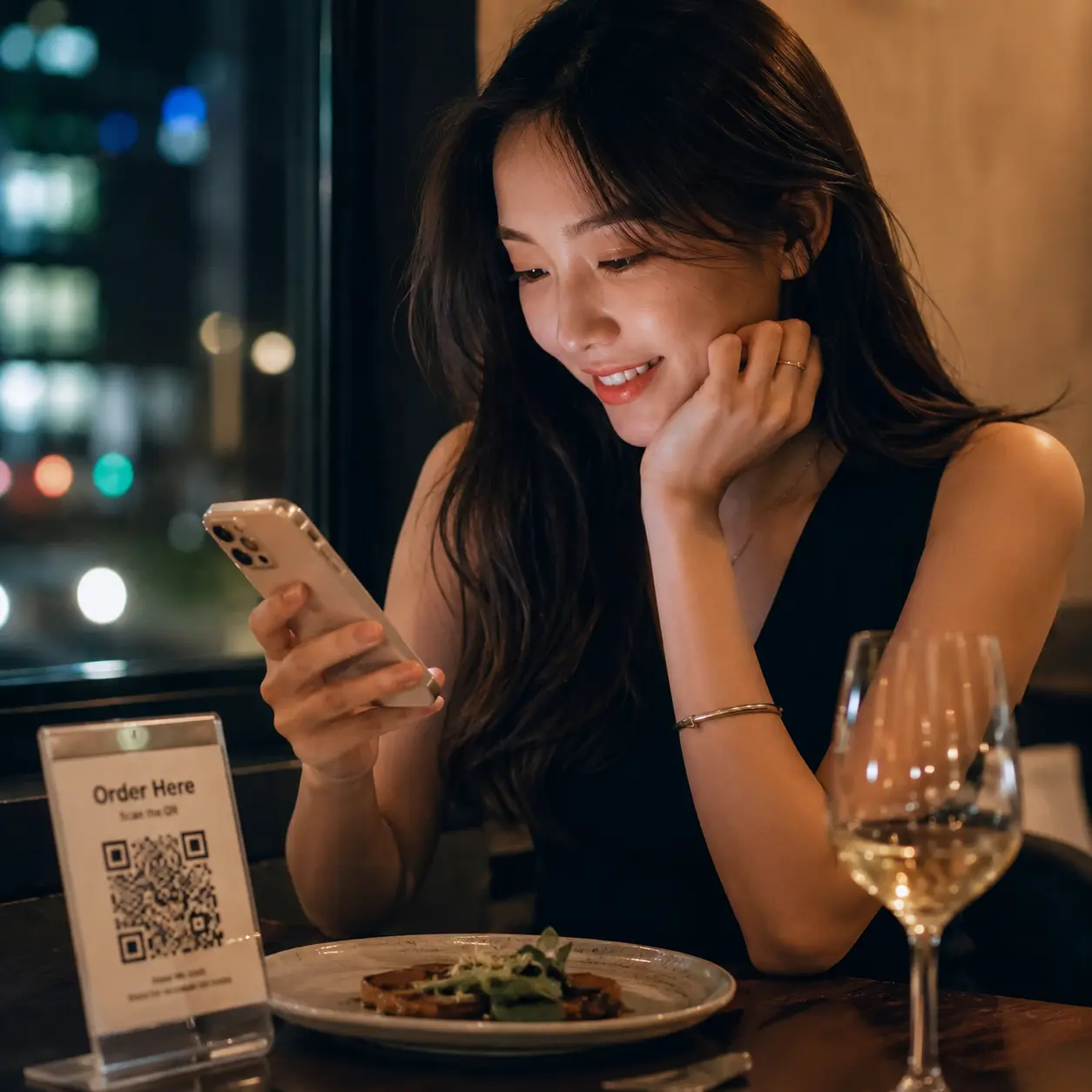
With QR ordering, customers scan a code at the table, view the menu on their phone and place an order directly.
They do not need to wait for a staff member to arrive.
They can also compare dishes and decide what they want without feeling that they are holding up a busy employee.
In a traditional ordering process, customers may call a staff member before they are ready or continue deciding while the staff member waits.
With QR ordering, choosing an item and submitting the order become part of one continuous process.
This reduces the delay before an order is placed.
Earlier orders also reach the kitchen sooner.
Additional orders can be submitted as soon as a customer decides they would like another drink or dish.
This uninterrupted flow is important in restaurant operations.
When ordering slows down, food preparation slows down.
When additional orders are delayed, opportunities to increase average order value are lost.
The final stages of the visit also become slower, delaying the next seating.
QR ordering helps remove these bottlenecks and keeps each table moving through the dining process more smoothly.
Customers Also Value Shorter Waiting Times
Some restaurant owners may worry that improving table turnover means rushing customers for the restaurant’s benefit.
That is not the purpose.
A separate 2022 study published by MDPI found that users of digital ordering systems valued saving time and reducing the wait for food.
Customers also want to avoid repeatedly searching for staff or experiencing awkward delays while trying to place an order.
QR ordering can help customers:
- Place orders sooner
- Make decisions more easily
- Reduce the wait for food
- Move through the dining experience more smoothly
This can bring the time spent at each table closer to an appropriate level without making customers feel rushed.
The restaurant can improve table turnover, while customers experience less waiting and frustration.
That balance is one of the main advantages of QR ordering.
Seating Capacity Is Fixed, but Table Turnover Can Improve
Most restaurants cannot quickly add more seats.
Opening hours cannot always be extended.
Hiring more staff is also difficult in a tight labour market.
However, table turnover can still be improved.
When ordering delays are reduced during busy periods, each table can move through service more efficiently.
That makes it easier to seat the next group sooner without increasing the number of tables.
Improved table turnover allows a restaurant to serve more customers within the same physical space.
It creates additional revenue opportunities without requiring a major investment in premises or equipment.
Before focusing only on attracting more customers, restaurants should examine how efficiently their current tables are being used.
The first delay to address is often the time spent waiting to order.
Qroda Provides Practical Infrastructure for Better Table Turnover
QR ordering can be introduced without major renovations or expensive dedicated equipment.
Customers place orders from their own phones.
Staff spend less time travelling between tables to take orders.
Ordering delays decrease, and service moves more efficiently.
Restaurants can then consider practical questions such as:
- Could one additional group be seated during the busiest period?
- Could lunchtime queues be reduced?
- Could the restaurant serve more customers without increasing staffing levels?
QR ordering addresses these operational questions directly.
Adding more seats can help increase revenue.
However, restaurants that are already busy should first consider how efficiently their existing seats are being used.
Reduce the wait to order.
Keep the service flow moving.
Serve more customers with the same seating capacity.
Qroda is a practical way to support that goal.
Qroda is a QR ordering service designed to help restaurants improve table turnover.
It reduces the workload associated with taking orders and helps restaurants capture more revenue opportunities during busy periods.
Make better use of the seats you already have.
The first step is to remove unnecessary ordering delays with QR ordering.
References
-
[1] Takeshi Shimmura and Syuichi Oura. Digital Ordering Improves Labor Productivity in Multiproduct Restaurants. Springer, 2021. https://link.springer.com/chapter/10.1007/978-3-030-85906-0_22
-
[2] Antecedents and Consequences of the Ease of Use and Usefulness of Fast Food Kiosks Using the Technology Acceptance Model. Systems, MDPI, 2022. https://www.mdpi.com/2079-8954/10/5/129

