Why the Time Spent Taking Orders Puts Greater Pressure on Restaurants With Fewer Front-of-House Staff
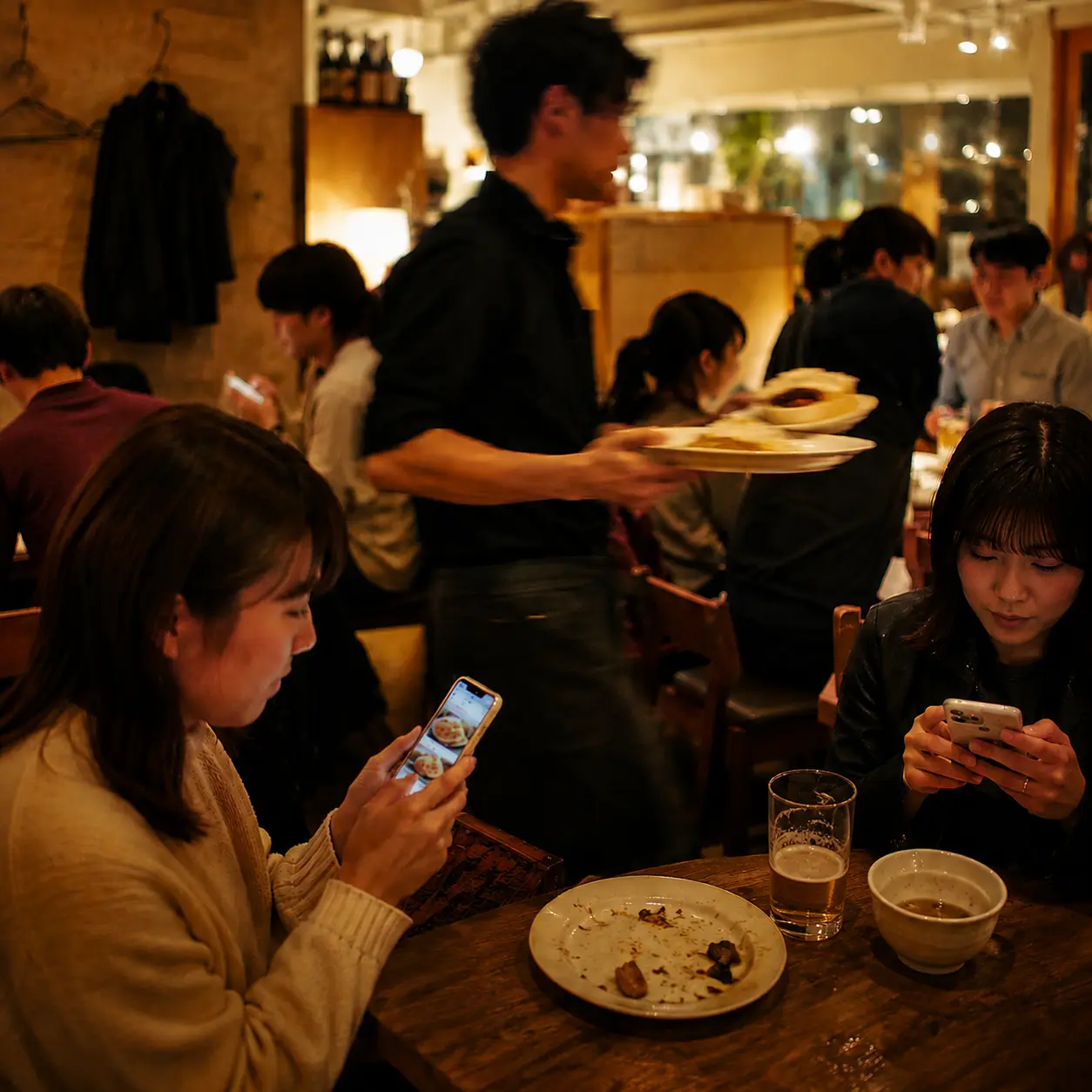
During the lunch rush, have you ever faced a situation like this?
- A customer at one table is raising their hand.
- Another table is calling for an additional order.
- The kitchen is announcing that a dish is ready.
- A line of customers is waiting to pay.
In a restaurant with limited staff, each task may seem small on its own. However, when several tasks happen at the same time, operations can quickly become difficult to manage.
One of the most commonly overlooked burdens is the time staff spend walking to tables to take orders.
Taking an order may appear to require only a few seconds. In reality, the full process includes walking to the table, listening to the order, repeating it for confirmation, sending it to the kitchen, entering it into the system, and returning to the previous task.
This is not a major problem when it happens only once.
However, when it happens repeatedly during a busy 30-minute lunch period, it steadily consumes valuable front-of-house time.
Labor Shortages Are No Longer a Temporary Problem
Labor shortages in the restaurant industry are not simply a matter of perception among people working on-site.
Japan’s Ministry of Agriculture, Forestry and Fisheries and Ministry of Health, Labour and Welfare have identified food service as one of the industries facing particularly serious labor shortages. From 2025 to 2029, the government is promoting concentrated investment in labor-saving measures.
This means restaurants can no longer rely only on hiring more people.
They must also ask:
Which tasks can be reduced with the staff already available?
The industry has reached a point where restaurant operators need to review their daily workflows from this perspective.
For Small Restaurants, the Easiest Thing to Reduce Is Unnecessary Walking
Small cafes, set-meal restaurants, izakayas, and independently operated restaurants usually cannot assign enough employees exclusively to front-of-house duties.
- The owner manages both the kitchen and the dining area.
- One staff member handles orders, food service, and payments.
- Family members or part-time workers help only during busy periods.
When operations become difficult in these restaurants, it is usually not because staff lack ability.
In many cases, the real problem is simply that they are making too many unnecessary trips between tables and work areas.
In a busy restaurant, the main problem is not the number of orders.
The real problem is that staff must repeatedly move around just to process those orders.
Restaurants Do Not Need Complicated Digital Transformation—They Need Fewer Trips to Take Orders
Restaurant owners want practical solutions.
- Can today’s lunch service be made easier?
- Can ordering mistakes be reduced?
- Can one person manage the dining area more effectively?
- Can the restaurant avoid printing new menus every time something changes?
One practical solution is QR ordering combined with tablet-based order management.
Customers scan the QR code at their table and place orders from their own smartphones.
The restaurant receives and reviews those orders in real time on a tablet.
This removes the need for front-of-house staff to walk to every table each time a customer is ready to order.
QR Ordering Does Not Make Customer Service Less Personal
The goal is not to eliminate customer service.
The problem is the repeated confirmation and communication required during busy periods.
- “May I take your order?”
- “Let me repeat your order.”
- “Please wait a moment.”
- “Let me confirm that again.”
When these interactions happen many times during peak hours, they create a significant operational burden.
When a customer’s order is sent directly to the restaurant from their device, staff no longer need to listen, repeat the order, and pass it to the kitchen every time.
As a result:
More time remains for the customer service that actually matters.
Small Restaurants Should Start With Existing Devices, Not Expensive Dedicated Equipment
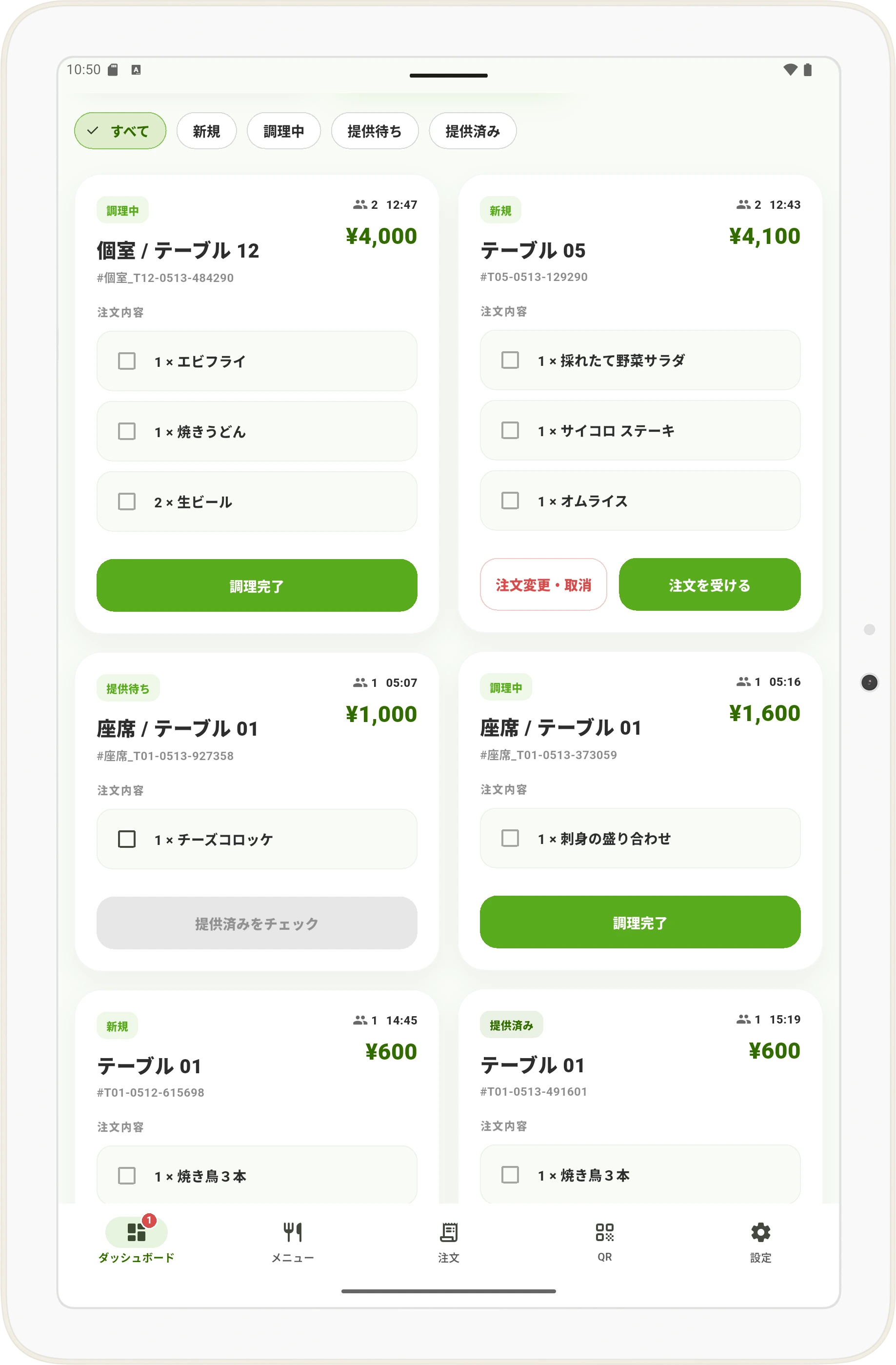
For restaurants with fewer seats and fewer staff, a system that works with existing smartphones and tablets is usually the most practical option.
With Qroda:
- Customers scan a QR code and order from their smartphones.
- The restaurant reviews incoming orders on a tablet or smartphone.
- Menu items and sold-out notices can be updated easily.
A small restaurant can begin with just one tablet.
Reducing the Number of Trips to Take Orders Changes the Flow of the Restaurant
- Staff make fewer trips to take orders.
- Misheard orders and communication errors are reduced.
- Instructions reach the kitchen more quickly.
- The current order status can be checked at a glance.
- Sold-out items and price changes can be updated immediately.
- Staff spend less time explaining the menu to international customers.
When hiring more people is not possible, the practical solution is to reduce the number of unnecessary movements.
For today’s small restaurants, this is one of the most realistic ways to reduce operational workload.
Small Improvements Create More Breathing Room for Staff
QR ordering may not suit every type of restaurant.
A safer approach is to start small.
Use it at only a few tables, during lunch service, or for additional orders.
Test it on a limited basis and confirm whether it fits the restaurant’s workflow.
Qroda is a QR menu and order management service designed to be easy for small restaurants to use.
It is suitable for restaurants that want to simplify order monitoring and reduce the burden of sharing information between staff during busy periods.
Reduce the number of times staff need to walk to a table just to take an order.
That small change can improve the entire flow of a restaurant during its busiest hours.

