From Gen Z to the Next Generation: QR Ordering Is Becoming a Mainstream Restaurant Channel
Restaurant operators sometimes express concerns about QR ordering.
Common questions include:
- Will some customers find it difficult to use?
- Will digital ordering make the restaurant feel less personal?
- Will customers believe that service has been reduced?
- Will smartphone ordering suit the restaurant’s brand?
These concerns are valid.
However, customer familiarity with digital ordering has increased, particularly among younger adults.
For many members of Generation Z, ordering through a smartphone is not an unusual technology experience. It is one of several established ways to interact with restaurants, retailers, financial services, transport providers, and travel platforms.
This does not mean that every Gen Z customer prefers QR ordering or that personal service is becoming unnecessary.
It means that restaurants increasingly need to support customers who expect fast, clear, and convenient digital options alongside human assistance.
Gen Z Is Moving Further into the Adult Consumer Market
Generation Z is commonly defined as people born from the late 1990s through the early 2010s, although the exact dates vary by source.
By 2026, the adult members of this group include customers in their late teens and twenties. Many are already working, managing their own spending, travelling, and making independent decisions about where to eat.
Over the next decade, more of this generation will move into higher-income and higher-spending life stages. The generations following them are also growing up with smartphones, digital payments, online reservations, delivery platforms, and self-service interfaces as familiar parts of daily life.
Restaurants should not interpret this as a reason to design exclusively for young customers.
The more useful conclusion is that familiarity with digital service channels is likely to extend across a larger share of the customer base over time.
Digital ordering is therefore becoming less of a specialist feature and more of a standard channel that customers may expect to be available when it improves convenience.
Waiting Is Not Automatically Perceived as Service
A traditional restaurant interaction may require customers to wait for several separate steps:
- A staff member to provide a menu
- A staff member to return for the order
- Assistance with an additional drink or dish
- Confirmation that an item is available
- The bill
- Payment processing
Some of this interaction contributes positively to hospitality.
A useful recommendation, a personal welcome, or assistance with an unfamiliar menu can improve the experience.
Waiting without information or a clear reason creates less value.
Customers are unlikely to interpret an avoidable delay as high-quality personal service simply because a staff member is involved.
A digital ordering channel can allow customers to complete routine actions without waiting while leaving staff available for interactions that require judgment or personal attention.
The relevant distinction is not between human service and technology.
It is between:
- Valuable personal interaction
- Unnecessary customer effort
Customers May Want Control, Not Isolation
The preference for smartphone ordering should not be reduced to the idea that younger customers do not want to speak with employees.
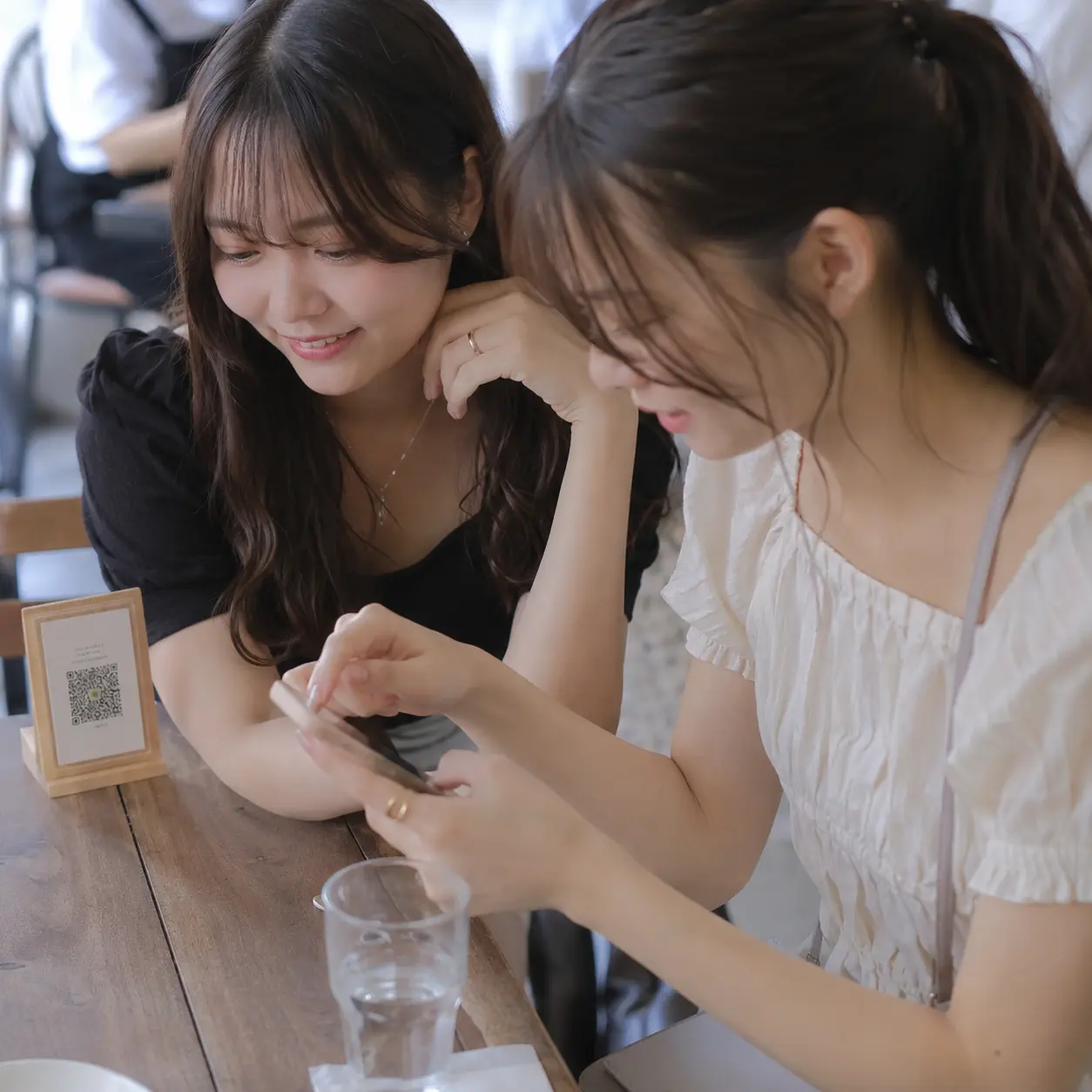
Many customers value social interaction while also wanting control over when and how they place an order.
For example, they may want to:
- Review photographs and descriptions without pressure
- Compare prices
- Discuss options with other people at the table
- Check ingredients or dietary information
- Add another item without interrupting the conversation
- Confirm the order before submitting it
- Request assistance only when it is needed
QR ordering can support this sense of control.
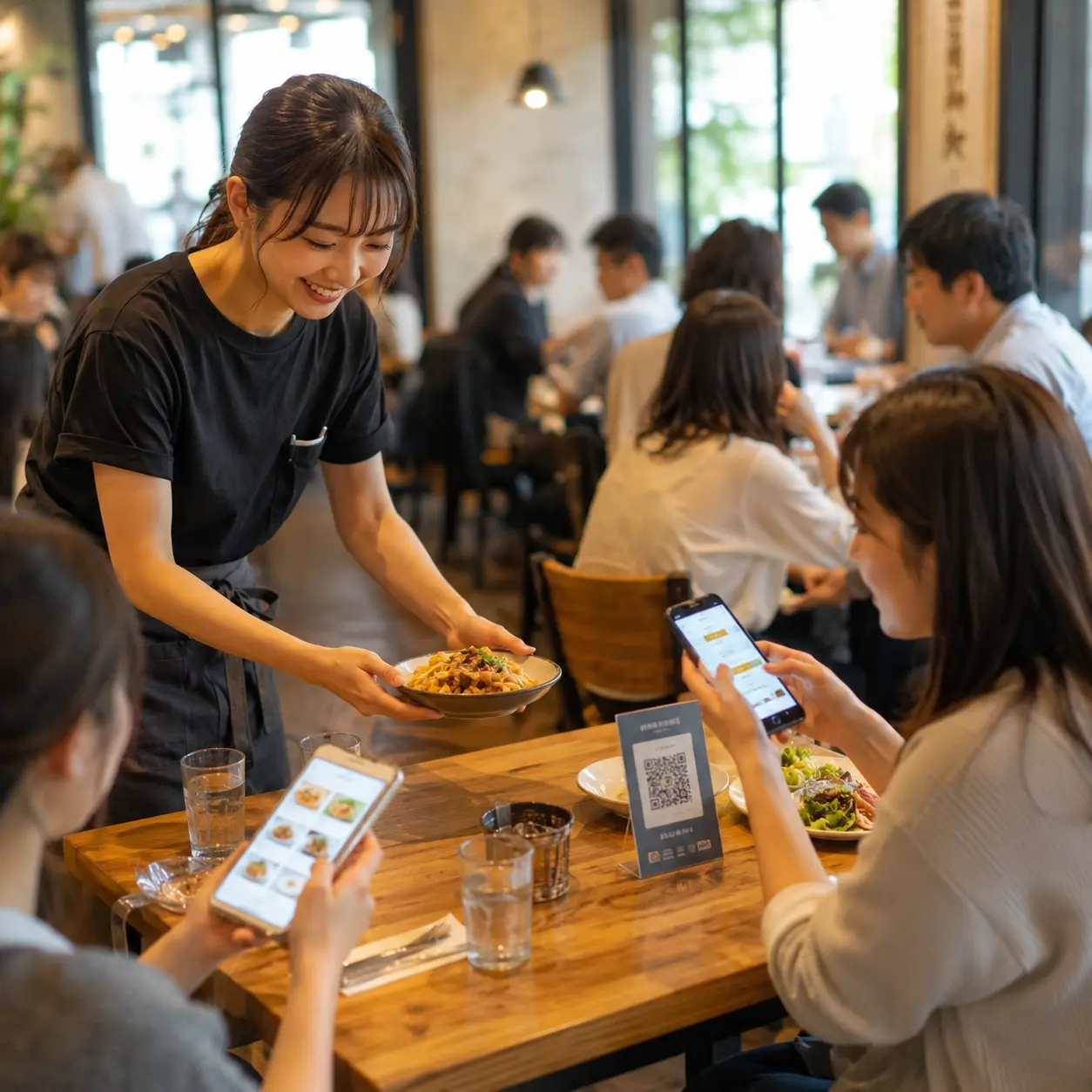
The customer does not need to attract a staff member’s attention for every routine action. At the same time, staff can remain available to answer questions, explain complex dishes, resolve problems, or provide recommendations.
Evidence Shows Stronger Acceptance Among Younger Adults
Restaurant technology research consistently shows that younger adults are generally more comfortable with digital ordering and payment than older groups.
In a 2024 United States restaurant-industry survey, 79% of Gen Z adults said they would use a smartphone application to place an order at a table-service restaurant if it were available. The equivalent figure was 33% among baby boomers. The same research found that 73% of Gen Z adults would use contactless or mobile payment options.
At limited-service restaurants, 82% of surveyed Gen Z adults reported being comfortable placing an order through a smartphone application.
Mobile ordering is also no longer limited to the youngest consumers. A 2025 industry study found that 57% of surveyed adults had recently used mobile ordering for off-premises restaurant purchases, including 65% of Gen Z adults and 74% of millennials.
These results come primarily from the United States and should not be applied directly to every country.
Customer acceptance will differ according to:
- Smartphone penetration
- Mobile-data access
- Local payment habits
- Restaurant format
- Age distribution
- Accessibility
- Language
- Trust in digital systems
- Service traditions
- The quality of the implementation
The evidence nevertheless supports a broader conclusion: younger customers often demonstrate strong acceptance of restaurant technology that makes ordering and payment more convenient.
QR Ordering Can Reduce Friction Around Additional Orders
Customers may intend to purchase another drink, side dish, or dessert but decide not to proceed because ordering requires additional effort.
They may be unable to attract a staff member’s attention, believe the team is too busy, or decide that the remaining time does not justify waiting.
QR ordering can reduce this friction by allowing customers to review available items and submit another order when they are ready.
Potential benefits include:
- Easier access to the current menu
- Greater visibility of optional products
- Faster submission of additional orders
- Less dependence on staff availability
- A clear opportunity to review the order before confirmation
Digital interfaces may also allow restaurants to display relevant recommendations, such as:
- Side dishes
- Drink pairings
- Desserts
- Product upgrades
- Seasonal items
However, restaurants should not assume that QR ordering automatically increases average transaction value.
The result depends on:
- Menu design
- Product relevance
- Pricing
- Customer demand
- Service speed
- Recommendation quality
- Interface usability
- Whether customers can easily obtain assistance
- Whether the additional items can be produced and delivered promptly
Aggressive or irrelevant recommendations can damage the customer experience.
The objective should be to make appropriate choices easy to discover, not to pressure customers into spending more.
Digital Ordering Is Becoming Mainstream, but Not Universal
Younger adults are accustomed to completing many activities through smartphones, including:
- Shopping
- Payment
- Hotel and travel booking
- Transport services
- Banking
- Event tickets
- Food delivery
- Restaurant reservations
This broader digital familiarity supports the adoption of smartphone-based restaurant ordering.
However, calling QR ordering the universal future standard would be too strong.
The restaurant market includes many different service models:
- Quick service
- Counter service
- Cafés
- Casual dining
- Bars
- Fine dining
- Food halls
- Hotels
- Institutional catering
- Event venues
A digital-first process may be appropriate for one format and unsuitable as the primary ordering method for another.
For example, QR ordering may create value where customers frequently place additional orders or where a small team manages many tables. In a high-touch dining environment, digital ordering may work better as a supporting option than as the main interaction.
The likely future is not one ordering method replacing every other method.
It is a multi-channel service model in which customers can use the most appropriate option for the occasion.
Avoid Making the Restaurant Difficult to Use
Restaurants do not need to force every customer to order through a QR code.
A more inclusive approach is to provide a choice:
- Order through a staff member
- Order through a QR menu
- Request assistance during the digital process
- Use an accessible alternative when a smartphone is unsuitable
This matters because customers may be unable or unwilling to use QR ordering for several reasons:
- No compatible smartphone
- Low battery
- Poor mobile or Wi-Fi connectivity
- Visual, motor, or cognitive accessibility needs
- Difficulty reading small text
- Security or privacy concerns
- Limited digital confidence
- Language barriers
- A preference for personal interaction
A restaurant should not make a customer feel unwelcome or inconvenient because the customer requests human assistance.
The digital system should expand customer choice rather than remove it.
Ordering convenience is increasingly part of the restaurant experience, but convenience must include accessibility and reliability.
QR Ordering Should Not Reduce Hospitality
A common implementation mistake is to install QR ordering and then reduce visible service without redesigning staff responsibilities.
Customers may be able to place an order digitally but still need help with:
- Seating
- Menu recommendations
- Allergens
- Product modifications
- Delivery timing
- Missing items
- Technical problems
- Payment
- Service recovery
Staff should remain attentive even when the order itself is submitted electronically.
The operational value of QR ordering comes from redirecting employee time.
Instead of repeatedly collecting routine orders, staff can focus on:
- Welcoming customers
- Delivering food promptly
- Monitoring tables
- Answering meaningful questions
- Supporting customers who require assistance
- Resolving issues
- Maintaining cleanliness
- Creating a comfortable atmosphere
Technology should remove unnecessary waiting without removing the restaurant’s human presence.
The Digital Experience Must Be Simple
Customers generally do not want to complete a lengthy setup process before placing a routine restaurant order.
Potential barriers include:
- Downloading an application
- Creating an account
- Verifying an email address
- Providing unnecessary personal information
- Joining a loyalty program
- Accepting unclear marketing permissions
- Navigating several screens before reaching the menu
Each additional step increases the possibility that the customer will abandon the process and request manual service instead.
A practical QR ordering flow should be:
- Scan the code.
- Open the menu.
- Confirm the table or service location.
- Select products.
- Review the order.
- Submit it.
- Receive clear confirmation.
The restaurant should collect only the information needed to deliver the service, comply with applicable law, and complete any requested payment or receipt process.
The customer should also be able to understand:
- Whether the order has been accepted
- Whether payment is required immediately or later
- How to make a change
- How to request staff assistance
- Whether service charges or other fees apply
- What happens if the connection fails
A QR code alone does not create a good digital experience.
The entire process must be clear and dependable.
Qroda Provides a Direct Smartphone Ordering Experience
Qroda is designed to let customers access a restaurant menu and begin ordering by scanning a QR code.
Based on the current product description, the customer does not need to download a dedicated application or create a membership account before placing an order.
This reduces the number of steps between scanning the code and reviewing the menu.
Potential operating benefits include:
- Direct access through a compatible smartphone browser
- No customer application installation
- No mandatory account registration for routine ordering
- Table-specific access
- Digital menu information
- Customer-controlled order timing
- Easier submission of additional orders
- Centralized order visibility for the restaurant
These features can support customers who are already comfortable with smartphone services.
However, a successful implementation should still provide:
- Staff assistance
- An alternative ordering method
- Clear price and product information
- Accessible menu design
- Reliable order confirmation
- Privacy information
- A fallback process for technical problems
Product functionality, pricing, payment support, data handling, and device requirements should be confirmed against Qroda’s current service terms before publication.
The Next Standard Is Customer Choice
The restaurant industry is not moving toward a future in which every customer must order in the same way.
It is moving toward a future in which customers increasingly expect routine interactions to be fast, clear, and available through digital channels.
Gen Z provides an early indication of this change because younger adults generally show stronger acceptance of smartphone ordering and payment.
The generations following them are likely to have similarly high levels of digital familiarity.
For restaurants, the strategic response is not to eliminate traditional service.
It is to offer a well-designed ordering experience that allows customers to choose between digital convenience and human assistance.
A strong restaurant experience may therefore combine:
- Fast smartphone ordering
- Clear menu information
- Easy additional orders
- Accessible alternatives
- Attentive employees
- Personal help when it adds value
QR ordering is no longer an experimental concept for many customers.
It is becoming an established restaurant service channel.
The businesses that benefit will not necessarily be those that adopt the most technology.
They will be those that use technology to reduce friction while preserving hospitality.
Evidence Base
- The National Restaurant Association’s 2024 technology research found that 79% of surveyed Gen Z adults would use a smartphone application to order at a table-service restaurant, compared with 33% of baby boomers.
- The same industry research found that 82% of Gen Z adults were comfortable ordering through a smartphone application at a limited-service restaurant.
- A 2025 off-premises dining study reported that mobile ordering had been used recently by 57% of surveyed adults, including 65% of Gen Z adults and 74% of millennials.
- Restaurant technology preferences vary significantly by age. Younger adult groups generally show higher interest in smartphone ordering, table-based digital ordering, mobile payment, and digital wallets than older customers.
- Deloitte research describes convenience and frictionless digital experiences as important influences on restaurant customer behavior, while emphasizing that digital tools must support the complete customer experience.

